
Blog
Why Do White Birch Trees Peel? | A Winter Discovery in My New Hampshire Woodlands

By DG Videtto — Woodland Enthusiast • American Storyteller
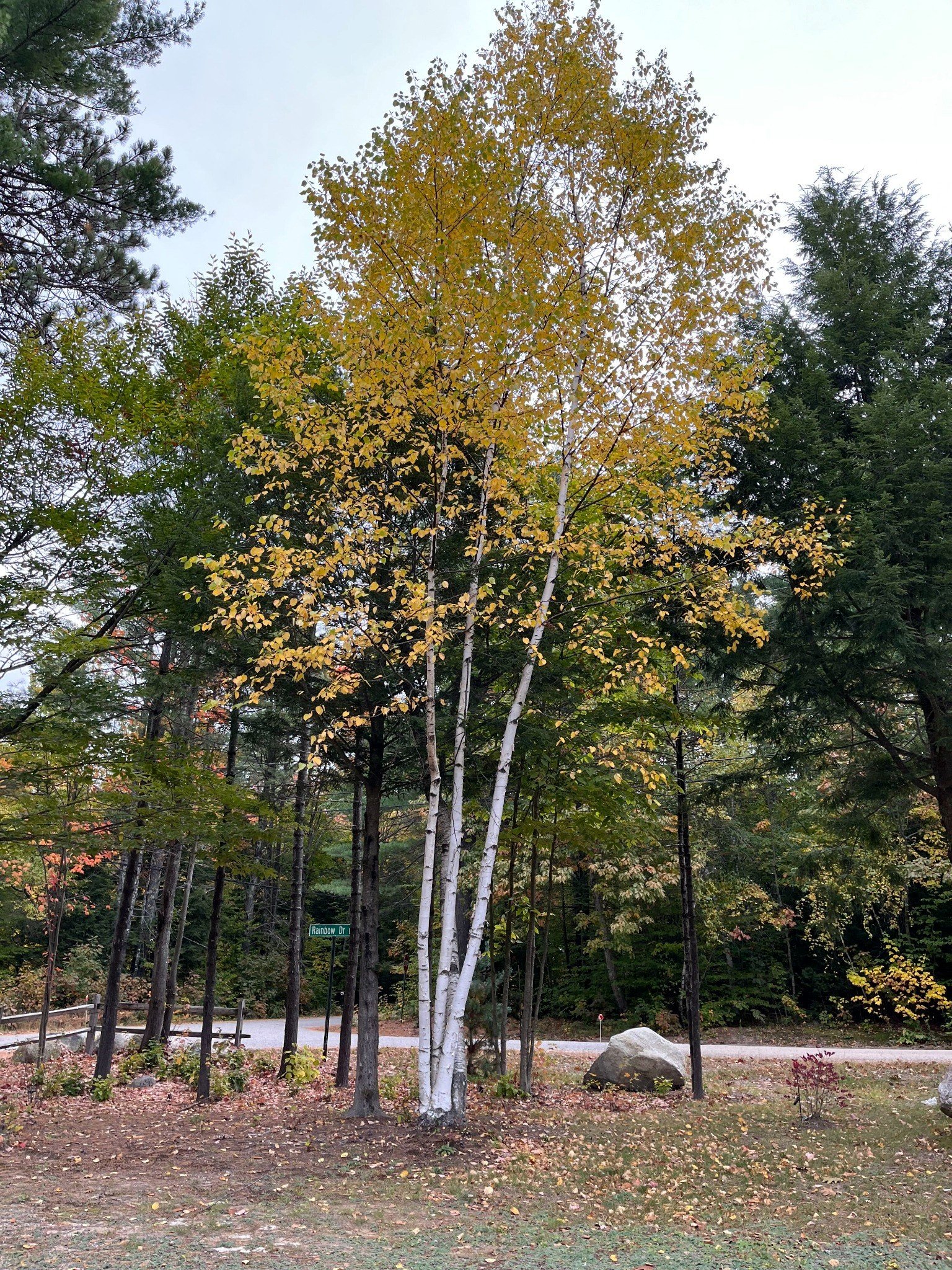
White birch in autumn, in my New Hampshire country yard. © DG Videtto
There are several beautiful white birch trees growing throughout my New Hampshire woodlands and country yard. Each has its own place in the landscape.
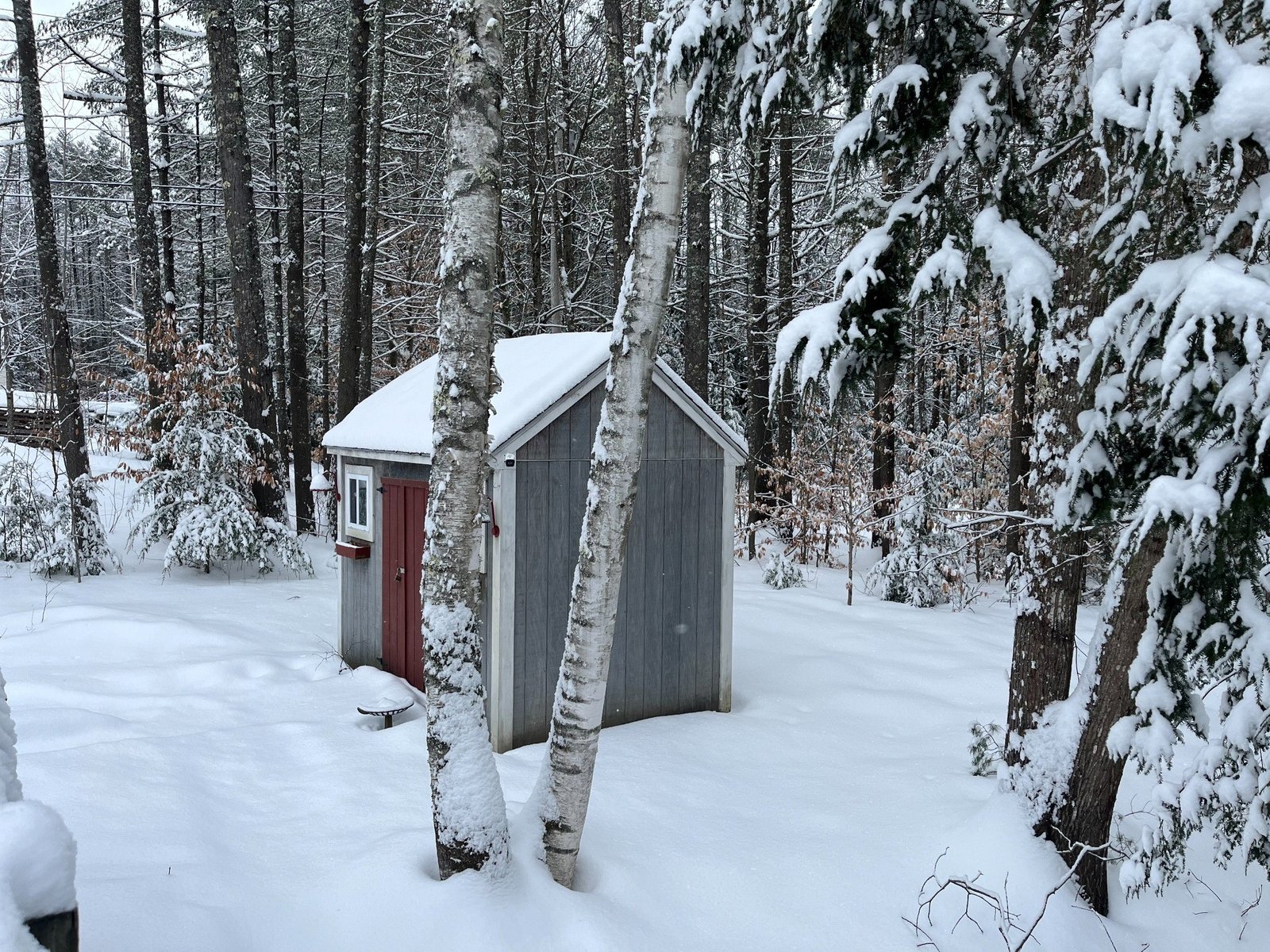
One particularly beautiful birch grows near our deck, beside a little shed. Its white trunks are a familiar part of our winter scenery, especially when snow settles over the surrounding evergreens.
Another stands near the boundary of our property, beneath the power lines. In autumn, its golden foliage is especially striking against the surrounding pines.
Farther into the woodlands, groups of white birches grow near an area where I’ve observed pink lady’s slippers. I tread carefully there. These woodland wildflowers remind me that what grows beneath the trees deserves just as much consideration as the trees themselves.
I’ve selectively cleared some surrounding vegetation to allow a little more light to reach my birches while being mindful of the natural woodland habitat. They all appear to be thriving.
As part of my stewardship of our woodlands and country yard, I continue to observe, research, and learn about the trees, plants, and wildlife that share this landscape. I am not an expert, but I believe that asking questions and seeking reliable information are important parts of caring for the natural world around me.
And one question that has fascinated me for years is why the beautiful white bark of our birch trees continues to peel.
Why? Why? Why? That’s usually where my woodland adventures begin!
White birch trunks beside the shed, surrounded by snow-covered evergreens. © DG Videtto
Why Does White Birch Bark Peel?
White birch, also known as paper birch (Betula papyrifera), is recognized for its distinctive white bark and thin, curling outer layers.
As the tree grows, older outer bark layers can separate and peel away. This is a natural characteristic of paper birch and doesn’t necessarily indicate that something is wrong.
The bark contains a naturally occurring compound called betulin, which contributes to its distinctive white appearance.
But that beautiful white bark serves a purpose beyond making the tree easy to recognize. Its reflective surface helps reduce warming from winter sunlight. This is particularly important because rapid changes in temperature can damage the living tissues beneath a tree’s bark.
And those little horizontal markings along the trunk? They’re called lenticels. These structures allow gases, including oxygen and carbon dioxide, to move between the living tissues beneath the bark and the surrounding air.
Interestingly, peeling bark can also help remove lichens, mosses, and other organisms growing on its surface, reducing the likelihood that these organisms will obstruct the lenticels.
Who knew there was so much happening in something as familiar as tree bark?
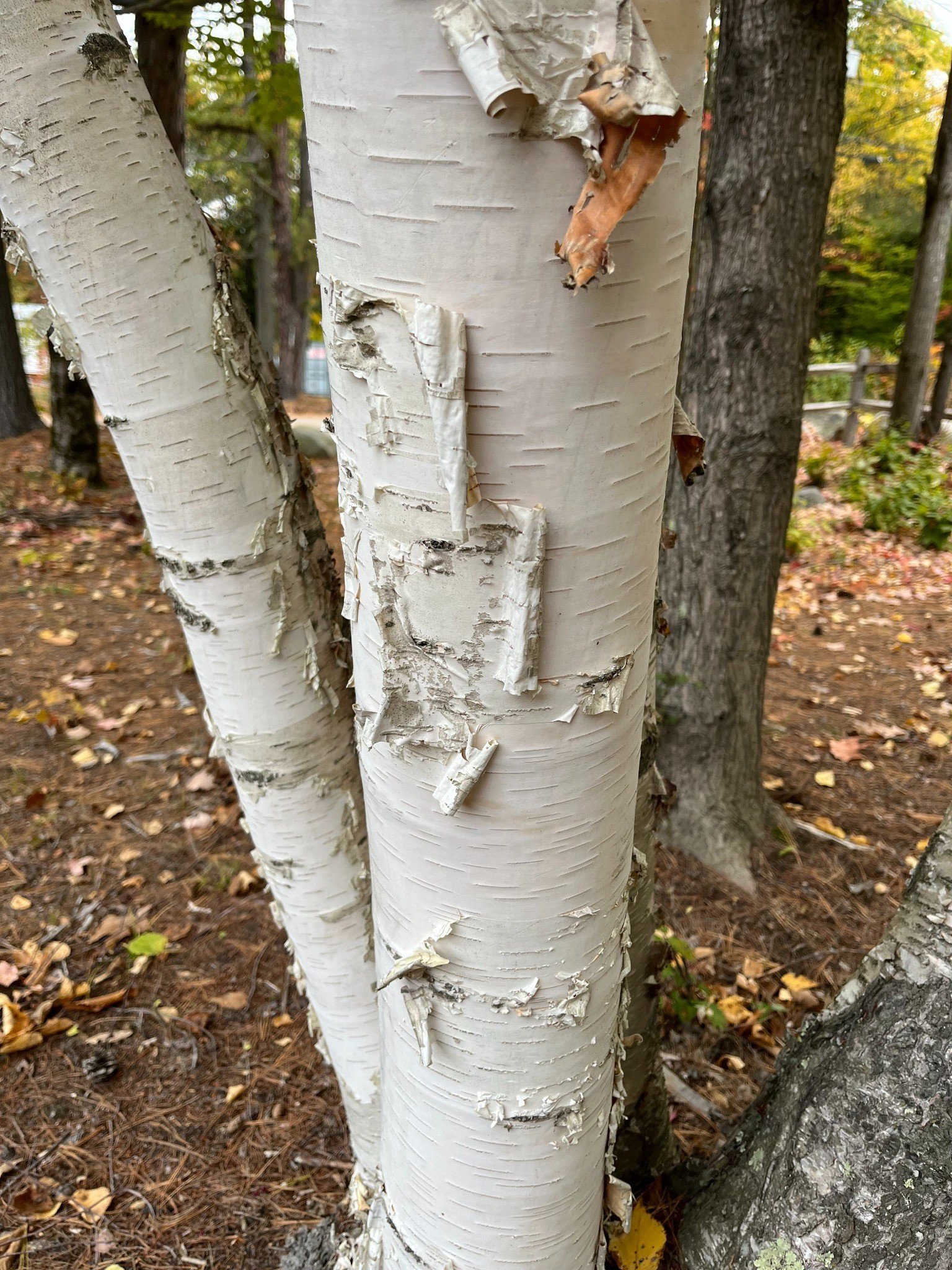
Close-up of naturally peeling paper birch bark and horizontal lenticels. © DG Videtto
Built for Northern Winters
The white birch is New Hampshire’s official state tree, a designation it received in 1947.
These trees are well adapted to cold northern environments, including the forests of New Hampshire’s White Mountains. Mount Washington offers a remarkable example of just how extreme our regional winter weather can become. However, the temperatures experienced by trees growing in the surrounding forests are not necessarily the same as those recorded at the mountain’s exposed summit.
A Note About My Earlier Research
In my December 2025 video, Why Do Birch Trees Shed Their Bark?, I mentioned that birch trees could withstand temperatures as low as −128°F.
After revisiting the subject and checking additional forestry and meteorological references, I have not been able to verify that specific temperature as a survival limit for paper birch. The figure may have resulted from confusion involving Celsius, Fahrenheit, or wind-chill measurements, but I cannot confirm its origin.
The National Park Service confirms that paper birch can survive temperatures below −40°F. Wind chill describes the increased cooling effect of moving air. It does not mean that the actual air temperature has fallen to the wind-chill value.
The broader point of my original research remains: paper birch is remarkably adapted to northern winters, and its reflective bark is one of the features that helps protect it.
Research is part of my woodland curiosity, and sometimes returning to a subject brings a better understanding.
Another Birch in My Woodlands
I also have a beautiful mature yellow birch growing in the woodlands.
Unlike the brilliant white bark of paper birch, yellow birch (Betula alleghaniensis) has bark that can appear golden, bronze, or silvery, often curling into thin strips. Older trees may develop darker, rougher bark.
It’s another reminder that even closely related native trees have their own distinctive characteristics.
From Woodland Observations to Storytelling
Nature doesn’t just inspire my curiosity. It also inspires my children’s stories.
About three years ago, I observed a chipmunk that seemed to prefer keeping its distance from the activity around an old oak tree.
While other chipmunks were busy with their woodland routines, this particular little fellow appeared content to remain apart.
That observation helped inspire Birch, a fictional chipmunk character in The Impervious Forest, Book 1 of The Woodlands Series.
In my stories, Birch is something of a recluse. But like many woodland characters, he may have a few surprises waiting for readers!
The real chipmunk and my fictional Birch are, of course, different. One was a woodland neighbor I observed; the other became part of an imaginative story.
There’s Always Something More to Discover
Whether I’m admiring the white trunks against the pines, watching bark curl away from a familiar tree, or carefully walking near the lady’s slippers, I continue to find reasons to ask questions.
Sometimes the answer is right in front of me. Other times, it takes a little research. And sometimes, returning to an earlier discovery teaches me something new.
Living among the woodlands has taught me that even familiar surroundings can raise new questions.
I suspect that next winter, I’ll be looking up at those same birch trees, wondering what else they might teach me.
Watch My Original Woodland Observation
Why Do Birch Trees Shed Their Bark? | Winter in New Hampshire
Originally published December 12, 2025.
Sources and Further Reading
National Park Service — Paper Birch
https://www.nps.gov/articles/netn-species-spotlight-paper-birch.htm
Northern Woodlands — Getting to Know Bark
https://northernwoodlands.org/articles/article/getting-to-know-bark
Northern Woodlands — Why Are Paper Birches So White?
https://northernwoodlands.org/articles/article/why-are-paper-birches-so-white
University of Minnesota — Paper Birch
https://trees.umn.edu/paper-birch-betula-papyrifera
New Hampshire Almanac — State Tree
https://www.nh.gov/almanac/tree.htm
Mount Washington Observatory — Common Questions and Misconceptions
Some Common Questions and Misconceptions About Mount Washington
DG Videtto — Woodland Enthusiast • American Storyteller
The Woodlands Series LLC